
The Covenant
A Job Story
THE COVENANT BOOK I: THE SHAKING
Before faith is broken, it is shaken.
The Shaking opens the series with a quiet but devastating unraveling of ordinary life. Jeremiah Bennett is a man of prayer, integrity, and discipline. His household appears anchored until subtle fractures begin to surface. Loss does not arrive all at once. It whispers. It tests boundaries. It exposes what has been trusted too easily.
As unseen forces gain permission to sift what is genuine from what is assumed, marriage, identity, and spiritual confidence are pressed to their limits. Inspired by Job’s earliest trials, this volume explores the invisible battleground surrounding faithful obedience and asks whether devotion can endure without explanation.
This is not a story of punishment, but of refinement. The Shaking marks the moment when the covenant is tested, comfort is removed, and faith is forced to stand without guarantees.

WHY READ IT
Read The Shaking if you want to understand how faith is tested before it is ever broken. This book speaks to readers who believe deeply yet sense that something unseen is pressing against their lives. It explores how loss often begins quietly, how certainty erodes gradually, and how devotion is challenged not by open rebellion but by unanswered prayers.
This volume invites readers to recognize spiritual warfare that operates beneath ordinary routines. It asks whether faith can remain anchored when comfort disappears and obedience offers no immediate reward. The Shaking does not rush toward resolution. It honors confusion, waiting, and the fear that accompanies loss without explanation.
If you have ever felt that your faith was being sifted rather than strengthened, this book will resonate. It sets the foundation for the entire series by showing that covenant is not proven by blessings, but by what remains when stability is removed.
THE COVENANT BOOK II: THE BREAKING
If shaking tests faith, breaking exposes it.
The Breaking moves inward, where fractures deepen and consequences take shape. Relationships strain. Temptation finds new footholds. Silence replaces certainty. What was once held together by discipline is now tested by truth.
Jeremiah, Raina, and their daughter Liora are no longer fighting external pressure alone; the battle has entered the heart. Pride, shame, and fear begin to speak louder than prayer. The covenant itself feels heavy, even restrictive, as obedience demands more than endurance.
This volume confronts the painful reality that not everything broken is meant to be restored as it was. Some things must be dismantled to make room for what is true. The Breaking is the most emotionally intense chapter of the series, revealing what faith costs when answers do not come quickly.

WHY READ IT
Read The Breaking if you want an honest exploration of what happens when faith moves from theory into lived consequence. This book confronts the inner collapse that often follows prolonged suffering—when relationships strain, identity fractures, and obedience feels costly rather than noble.
The Breaking is for readers who have discovered that endurance alone does not heal wounds. It addresses shame, temptation, silence, and the painful truth that not everything broken is meant to be restored as it was. Faith here is no longer measured by belief, but by choice—daily, difficult, and costly.
This volume is especially meaningful for those navigating relational tension, spiritual fatigue, or seasons where prayer feels heavy rather than hopeful. It refuses easy answers and instead honors the refining work that occurs when faith is stripped of illusion. The Breaking deepens the covenant question and prepares the ground for true revelation.
THE COVENANT BOOK III: THE VOICE OF GOD
Silence does not mean absence.
The Voice of God centers on the moment Job waited for and feared, the moment God finally spoke. After loss, accusation, and prolonged uncertainty, revelation arrives not as comfort but as correction.
This volume explores divine authority, humility, and perspective. Jeremiah is confronted not with explanations, but with the truth that reorders how power, justice, and faith are understood. God’s voice does not justify suffering; it reframes it.
Here, covenant is no longer about survival but surrender. The Voice of God strips away entitlement, dismantles false theology, and restores reverence. It is the turning point of the series, where endurance gives way to clarity and obedience is redefined.

WHY READ IT
Read The Voice of God if you are searching for truth rather than comfort. This book explores what happens when God finally speaks, not to explain suffering, but to correct understanding. It is written for readers who have waited through silence and are ready to be reshaped rather than reassured.
This volume challenges shallow theology and confronts human assumptions about fairness, control, and reward. God’s voice does not flatter devotion or negotiate terms. It restores reverence and places human suffering within a larger framework of divine authority and purpose.
The Voice of God is essential for readers who want their faith refined rather than affirmed. It invites humility, surrender, and a deeper obedience rooted in awe rather than outcome. This book marks the turning point of the series, where covenant shifts from endurance to alignment and faith is no longer centered on relief, but on truth.
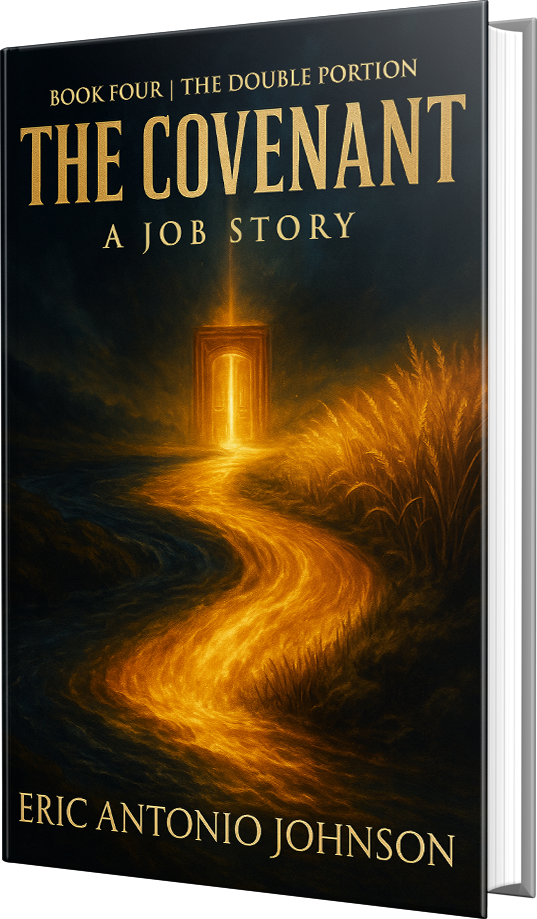
THE COVENANT BOOK IV: THE DOUBLE PORTION
Restoration is not the end of testing; it is the beginning of a new one.
The Double Portion follows life after deliverance, where favor returns but vigilance is required. Blessing multiplies responsibility. Visibility invites scrutiny. Abundance tests humility more sharply than loss ever did.
Jeremiah must now steward what God has restored without allowing pride to reclaim ground. The adversary adapts, shifting tactics from destruction to distraction. Covenant blessing reveals new vulnerabilities, especially within leadership, influence, and family legacy.
This volume explores the danger of forgetting the ashes that preceded the altar. The Double Portion is a warning: prosperity does not cancel covenant, it deepens it.
WHY READ IT
Read The Double Portion if you want to understand why restoration carries its own risks. This book explores the rarely discussed truth that blessing can test character more severely than loss. It examines the weight of favor, visibility, and influence after deliverance.
The Double Portion is written for readers who have experienced recovery, success, or answered prayer and sensed new pressure rather than peace. It reveals how pride, distraction, and complacency quietly threaten what suffering once refined. Covenant here demands stewardship, humility, and vigilance.
This volume speaks powerfully to leaders, parents, and believers navigating seasons of increase. It warns against forgetting the ashes that preceded the altar and reminds readers that God’s gifts are never given without responsibility. The Double Portion expands the covenant narrative from survival to legacy-conscious obedience.
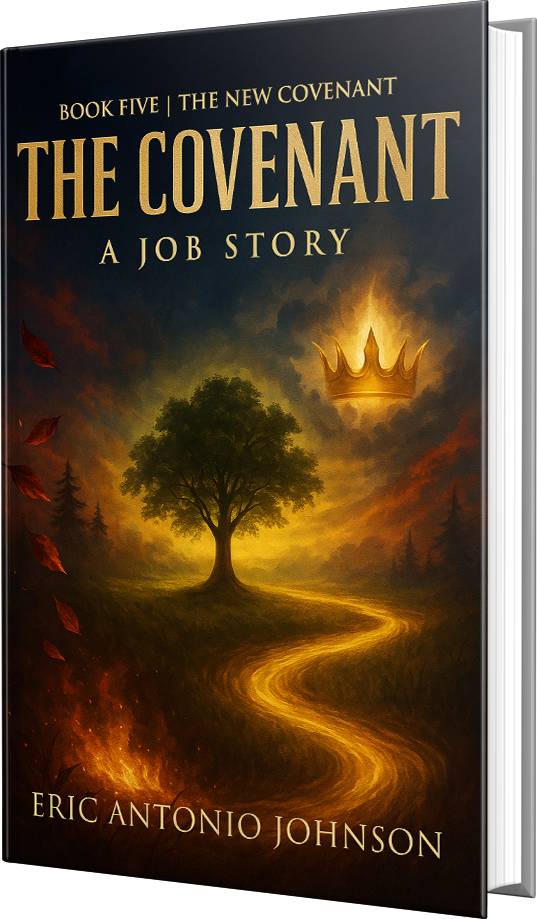
THE COVENANT BOOK V: THE NEW COVENANT
What is restored must be guarded.
The New Covenant examines the fragile space between blessing and complacency. Peace returns, but vigilance fades. Comfort dulls discernment. Unity begins to fracture quietly beneath success.
As Jeremiah senses gathering threats, others dismiss the warning as fear. Liora’s prophetic insight sharpens, revealing that the covenant is not merely inherited; it must be chosen by every generation. This volume focuses on watchfulness, obedience, and the danger of mistaking prosperity for permanence.
The New Covenant asks whether faith can remain disciplined when crisis no longer demands it, and whether obedience can survive applause.
WHY READ IT
Read The New Covenant if you want to explore the danger of peace without watchfulness. This book addresses the subtle erosion of discernment that occurs when life stabilizes and urgency fades. It focuses on vigilance, obedience, and the temptation to confuse prosperity with permanence.
The New Covenant is for readers who sense that comfort can be as spiritually dangerous as crisis. It examines how unity fractures quietly, how warnings are dismissed, and how obedience must be renewed intentionally. The prophetic thread deepens, especially through the next generation, revealing that covenant cannot be inherited passively.
This volume challenges readers to remain awake when circumstances no longer demand faith. It asks whether devotion can endure without pressure and whether obedience can survive applause. The New Covenant sharpens the call to active, disciplined faith.
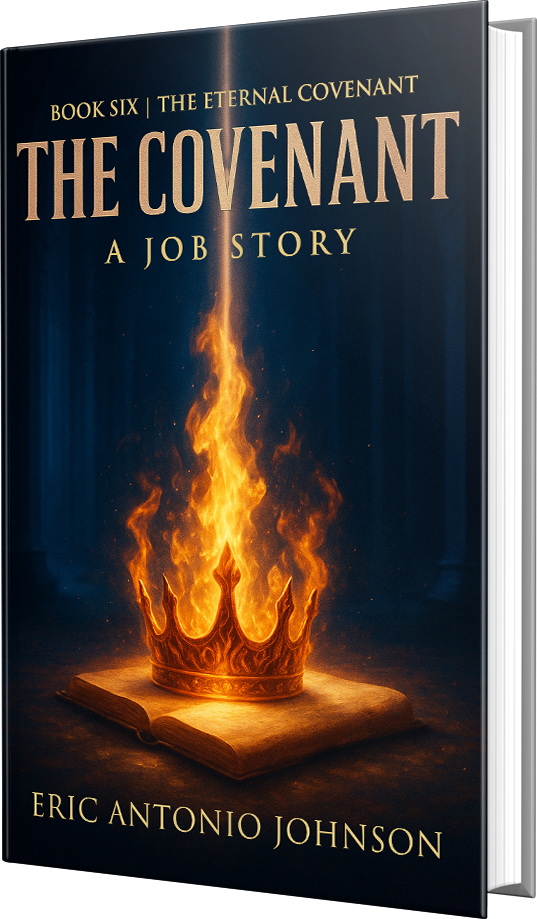
THE COVENANT BOOK VI: THE ETERNAL COVENANT
The final test is not crisis, but consistency.
The Eternal Covenant closes the series by focusing on legacy. After suffering, restoration, and renewal, the covenant becomes a daily posture rather than a dramatic event. Faith is practiced quietly, without crowds, without spectacle.
This final volume reflects on memory, humility, generational responsibility, and the long work of faithfulness. Jeremiah’s journey reaches maturity not through triumph, but through submission. Liora steps into her calling. Covenant extends beyond one household into future generations.
The Eternal Covenant affirms the central truth of the series: God’s promises endure, not because life becomes easy, but because faith learns how to remain faithful in ordinary days.
WHY READ IT
Read The Eternal Covenant if you are drawn to faith that lasts beyond crisis. This final volume focuses on legacy, maturity, and the quiet consistency required to live covenant daily. It reflects on memory, humility, and the long obedience that shapes generations.
This book is written for readers who understand that faith is not sustained by dramatic moments but by faithful repetition. It explores what remains after restoration, how covenant is carried into ordinary days, hidden decisions, and unseen obedience.
The Eternal Covenant offers a grounded, hopeful conclusion without spectacle. It affirms that God’s promises endure not because life becomes easy, but because faith learns how to remain faithful when life becomes ordinary. This is the book for readers who want their faith rooted deeply enough to outlast them.

Why Read It
Living the story
Out of the Valley, Into My Purpose is for readers facing grief, loss, or seasons where faith feels fragile. This book speaks directly to those who have prayed for healing and faced heartbreak instead, who feel strong for everyone else but are quietly exhausted inside. Roxanne Hyer offers a truthful portrayal of grief without minimizing pain or rushing hope.
Readers will find comfort in shared experiences, Scripture woven into real life, and reflections that encourage surrender rather than self-reliance. This memoir reassures readers that doubt does not disqualify faith and that God remains present even when answers are unclear.
If you are navigating loss, emotional burnout, or spiritual uncertainty, this book offers encouragement rooted in honesty and grace. It reminds readers that valleys are not permanent and that God often reveals purpose not in spite of pain, but through it.